“There were no hurdles. There was nothing that could not be overcome.”
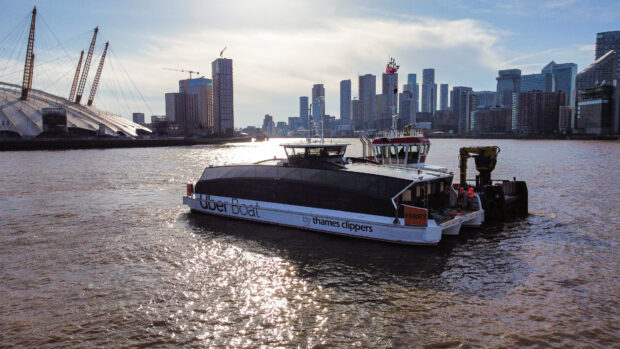
That's how Mike Greenwood, Technical Manager at the Maritime and Coastguard Agency (MCA), remembers the safety certification process that led to celebrations late last year for the launch of the Orbit Clipper, the UK's first fully electric zero-emissions ferry on the Thames.
Mike recalled: “When you see a vessel launch, there’s a real sense of achievement. You have worked with the customer right through the whole project so you can give it that final safety certificate and it’s ready to sail.”
In a way, that debut voyage in central London on 5 December began with an email to the MCA more than three years ago, in October 2022, from the operator, Uber Boat by Thames Clippers, outlining its plans for a new vessel.
Thanks to such early engagement, Orbit Clipper is now on its way to carrying thousands of passengers a day between Rotherhithe and Canary Wharf, with zero tailpipe emissions.
Mike said: “It is such a good example of what early discussions with the MCA can accomplish and how we can facilitate success when we are part of the process from the start.”
First steps
Mike heads up the 15-strong surveyor team at the MCA’s Colchester Marine Office which deals with about 180 domestic passenger boats on the Thames, ensuring they meet safety requirements. Each operator has a dedicated MCA contact who is familiar with their vessels and operations.
When Uber Boat by Thames Clippers got in touch in 2022, ideas were swapped and meetings held from the very start, avoiding any design dead-ends that overlooked important features.
The 150-passenger ferry, with a capacity for 100 bicycles, will cross the river every 10 minutes from each side on weekdays and every 15 minutes at weekends. It features a roll-on/roll-off design that enables automated docking on both sides.
“Our advice is always get us engaged at the earliest opportunity,” says Mike. “Even if you just send me a drawing of what you think the vessel will look like, I can help guide the design and give advice on complying with safety requirements. We won’t tell you what to do but we can advise.”
Sean Collins, CEO of Uber Boat by Thames Clippers, believes engaging MCA from the outset was crucial to making the UK’s first fully electric zero-emissions vessel a reality.
“Our long-held vision to provide more fuel-efficient and sustainable river transport was the inspiration behind Orbit Clipper,” he said, “but we knew any such plans would need the MCA’s approval. Recognising this, we shared our ideas with the MCA to get their insights and to discuss any potential issues or challenges.”
Vessel construction
At this stage, the MCA will usually focus on critical design elements later in the build, such as for safety and navigation.
Earlier stages will be signed off under delegated powers by outside organisations, known as Classification Societies. However, the final safety certificate that allows a vessel to sail is always decided by the MCA.
With Orbit Clipper being the first fully electric ferry on the Thames, the MCA deployed its special process for safely progressing innovative technology. The approach supports development and commerce while keeping passengers, crew and the environment safe.
It's good to talk
In discussions between MCA experts and the operator, exemptions were agreed under responsive regulations that ensured the design could be brought to life while upholding standards.
Mike said: “This was why it was so good they came to us in 2022 and asked what they needed to be aware of. We were able to talk it all through.
“There were no hurdles. There was nothing that could not be overcome.
Sean Collins added: “We worked with the MCA throughout every stage of production, from design to developing the vessel, to build a fully electric zero-emissions ferry that met all regulatory requirements for operating on the River Thames.”
Orbital Clipper, which is owned and operated by Uber Boat by Thames Clippers, was developed with part-funding from the Department for Transport and Innovate UK.
It was built in conjunction with project partners including high-speed aluminium ship builder Wight Shipyard Company; maritime civil engineering consultants Beckett Rankine; and electric infrastructure specialists Aqua superPower.
Do you have an idea, proposal or project on the theme of maritime decarbonisation that would benefit from early MCA engagement?
There is a range of funding and advice available: