For MCA surveyor Pippa Whalley, safety is built on a shared understanding that everyone has a vital role to play.
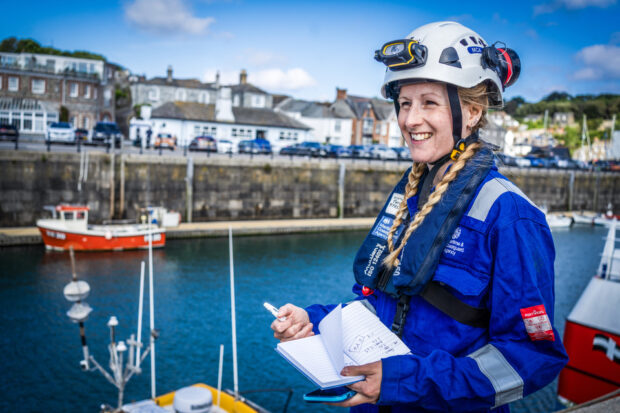
Having worked at sea for 15 years in offshore sector dive support and on pipelaying and construction vessels, MCA Surveyor Pippa Whalley acutely understands how vessel standards impact safety at sea.
After becoming a Master Mariner, Pippa decided to join the Maritime and Coastguard Agency as a Surveyor where she is responsible for conducting compliance surveys and inspections that ensure vessels meet safety standards.
The theme of this year’s Maritime Safety Week is "Every day, everyone: making maritime safety routine" and it reflects what Pippa says she sees every day. “Safety really comes down to the everyday choices made by all people,” she adds.
“It could be a foreign-flagged ship, a small fishing boat or a domestic passenger vessel – it doesn’t matter. The constant is that all people do the right things in their routines to ensure safety.”
The MCA’s targeted inspections campaigns might focus on a particular safety issue or vessel type. Pippa says: “Routine surveys and inspections are an important part of the certification process, but targeted inspection campaigns allow us to see vessels during normal day-to-day operations, providing a ‘real world picture’ for how safety is put into practice.”
But the role of surveyor isn’t just enforcement, it’s educational too. For Pippa, it’s a good opportunity to talk with crews about good practice and answer any questions they might have.
“I know what it’s like from a seafarer’s perspective when a surveyor steps aboard,” she says. “And I understand that for many, their vessel is their livelihood, and no one wants to interrupt that.”
“I try to approach inspections as a conversation rather than a checklist. Standards must be met of course, but a lot of our work is in explaining the reasons behind requirements so that crews understand not just ‘the what’ but ‘the why’ too.”
Most commonly, it’s routine checks that haven’t been kept up to date, or lapsed equipment service intervals and expiry dates. “That’s why everyday checks are crucial,” says Pippa. “These help identify potential issues early and make sure equipment is going to work in an emergency.”
Speaking about an effective approach towards safety checks, Pippa adds: “We don’t consciously think as much about putting on our seatbelts when we drive, but that’s exactly the point.
“Safety is at its best when it becomes habitual and forms part of your normal life. Keeping your routines simple and consistent means you’re more likely to notice if something isn’t right.”